Los Angeles Dances of Water and Power
On January 16, 1968, at 10:00 PM PST, LADWP workers breached the Los Angeles River,
inadvertently unearthing an unknown lifeform from a fissure in the concrete.
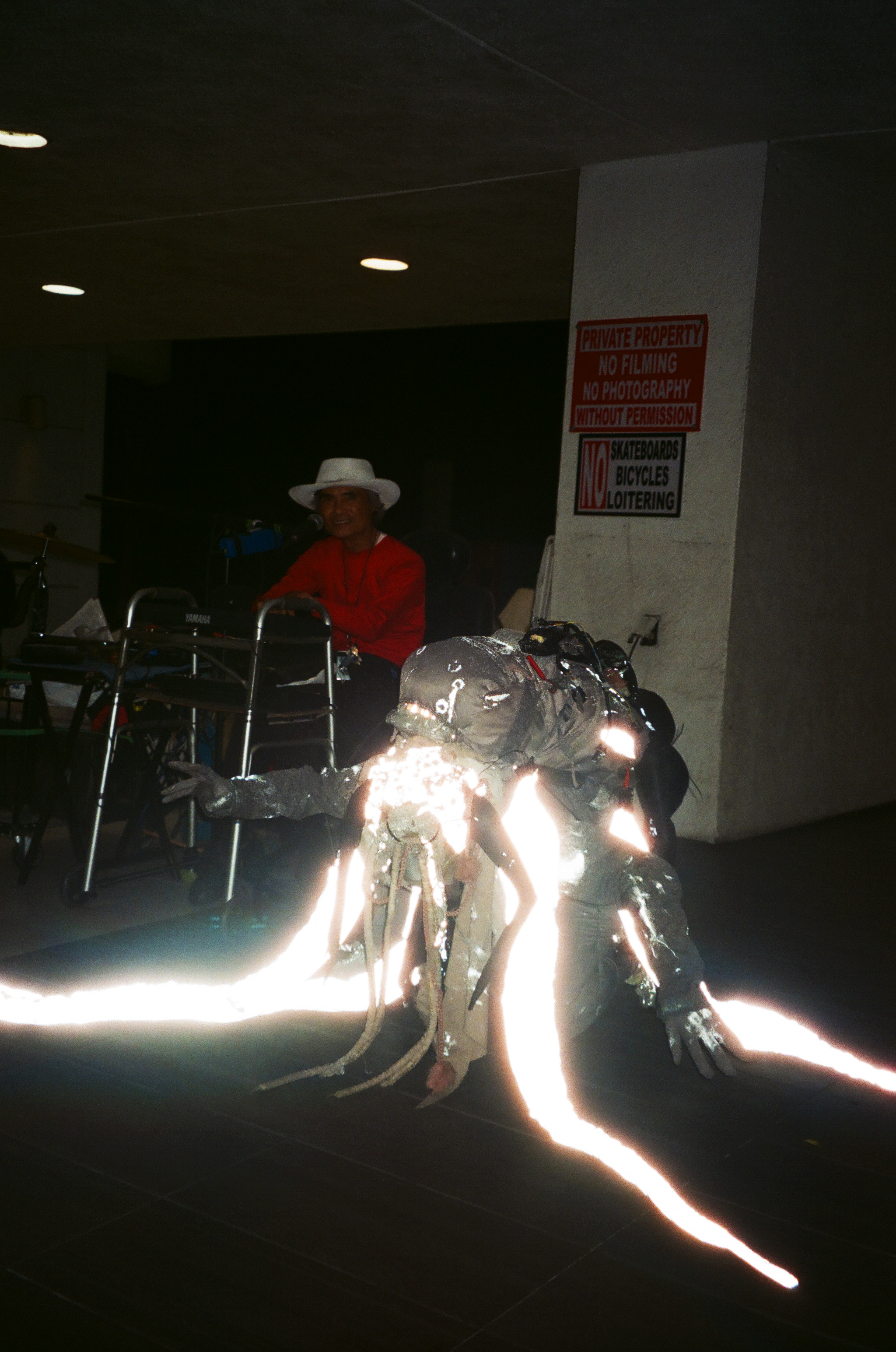
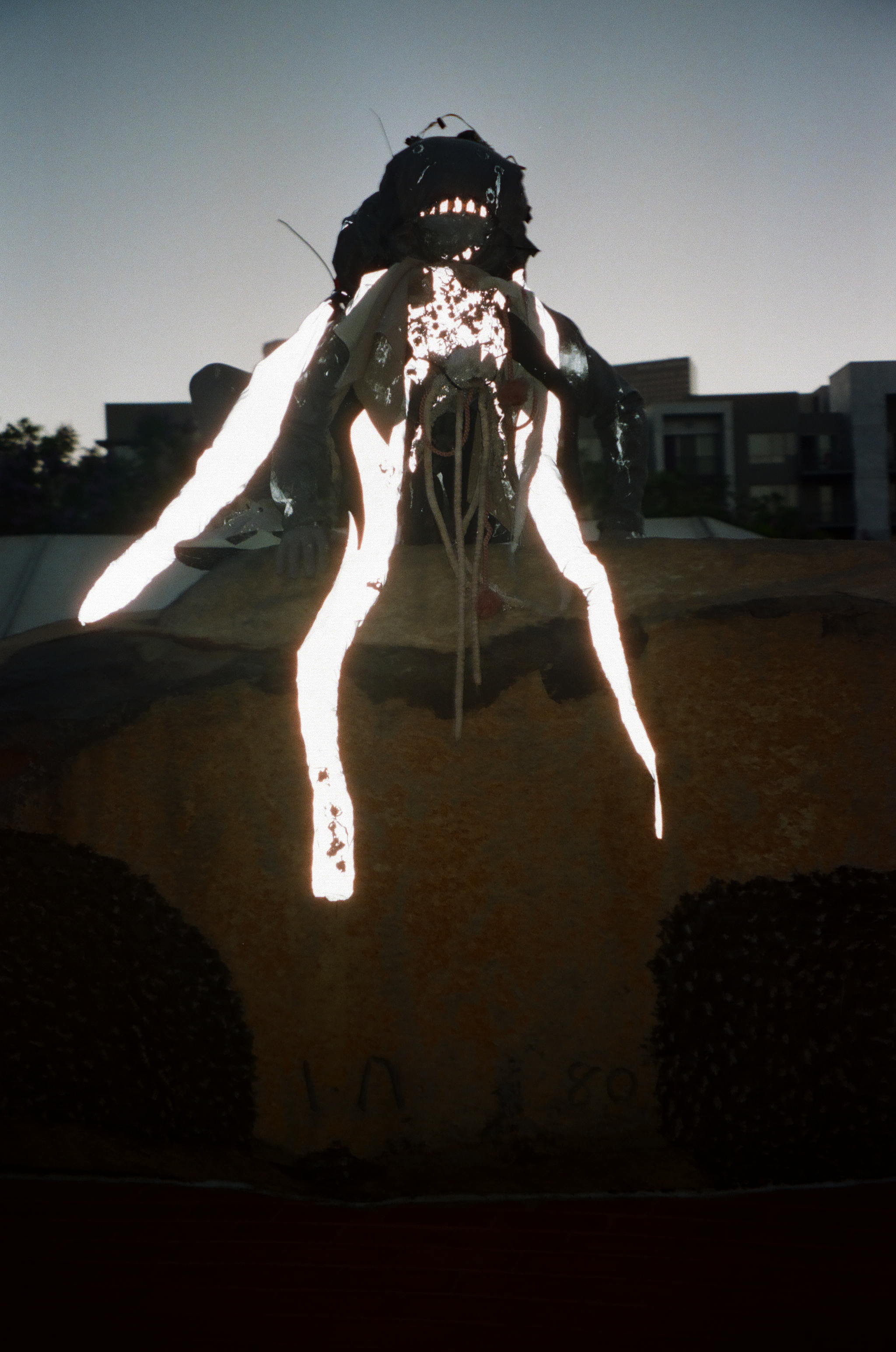
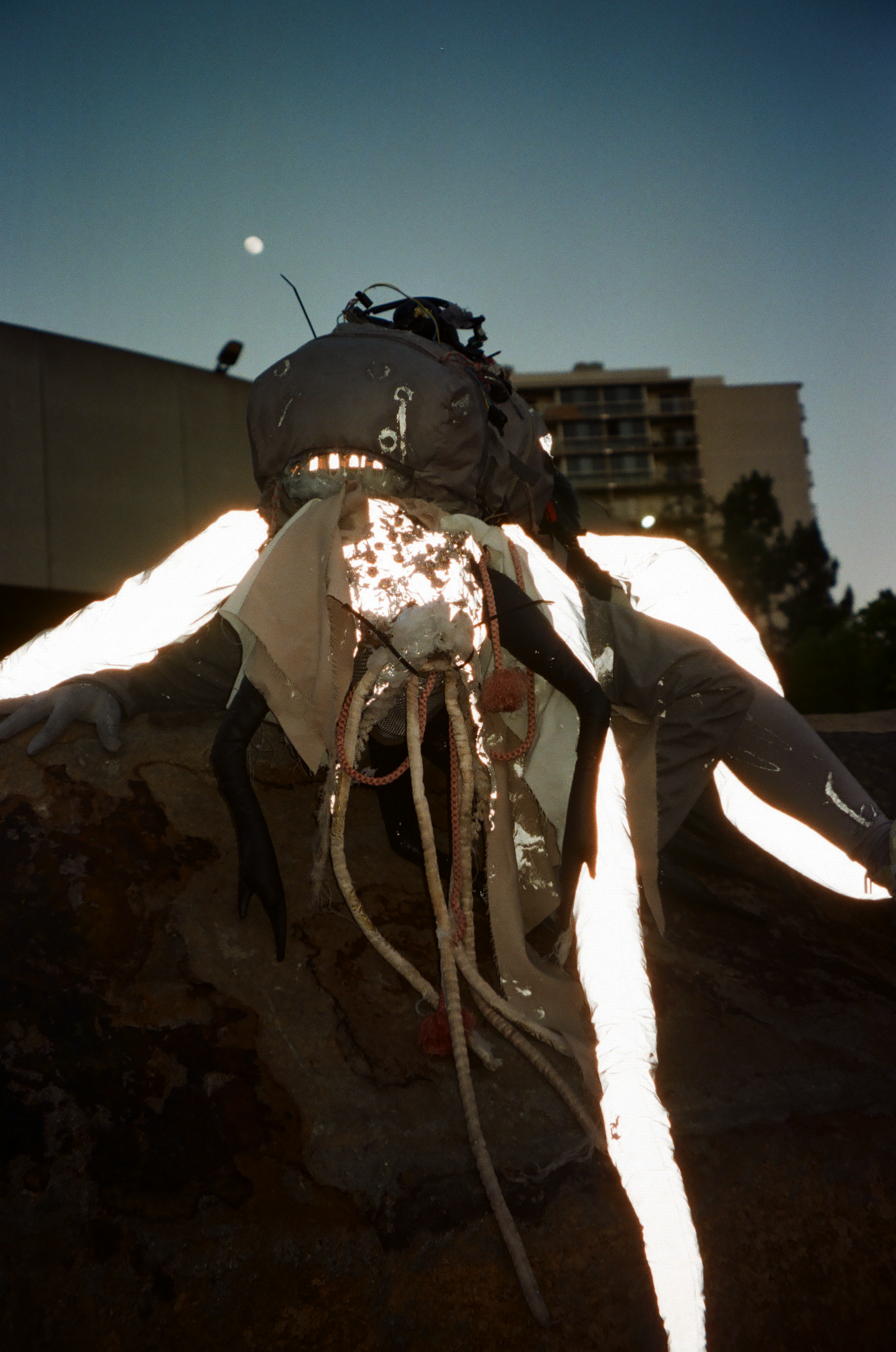
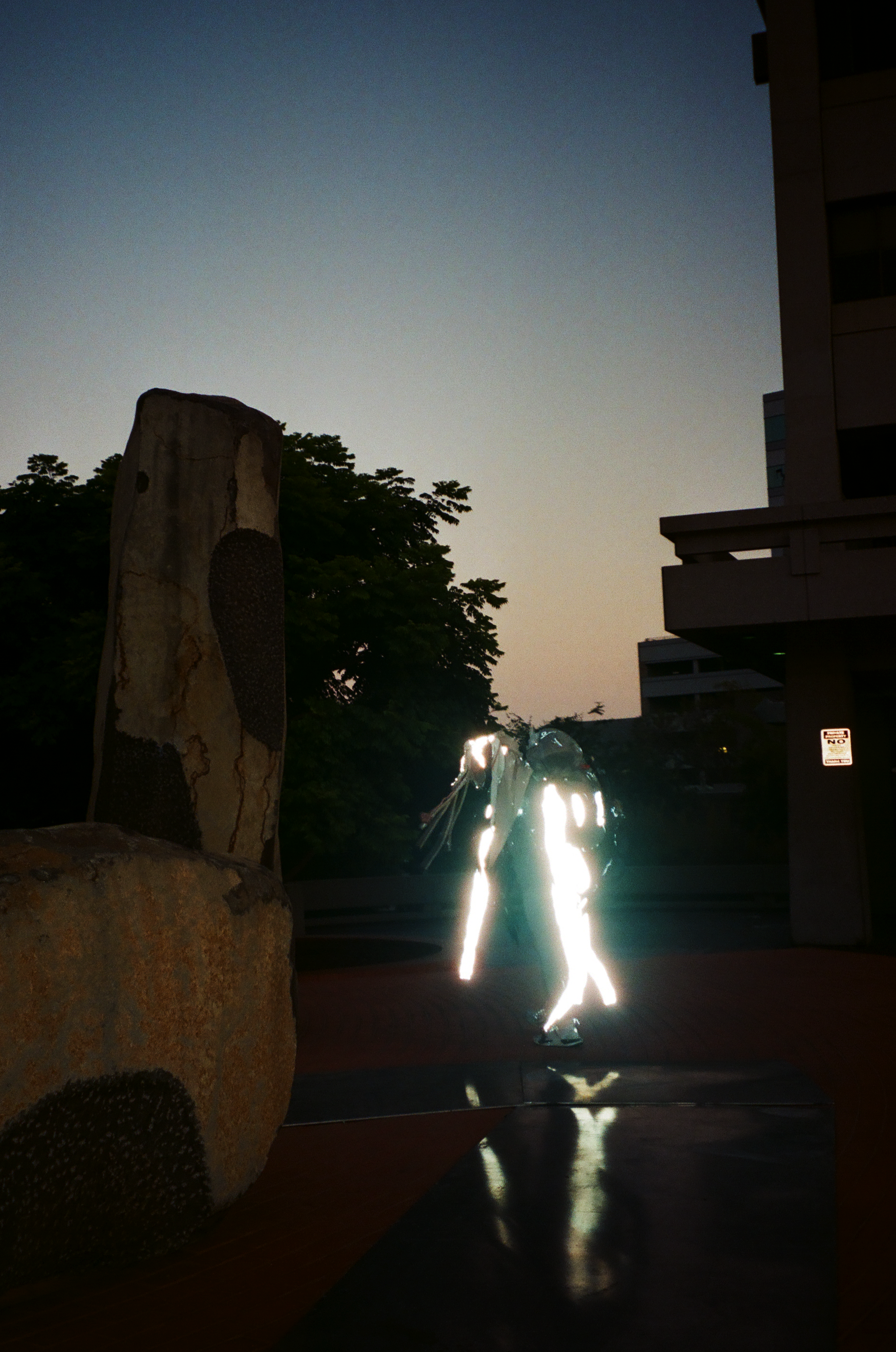
The creature’s body is an amalgamation of mutated forms: part human, part crustacean, and part trash. Its scaly skin is a sickly shade of iridescent gray, adorned with a hard plastic exoskeleton, protruding wires, and twisted appendages.
This shocking hybridization is the result of countless lifeforms and pollutants trapped within the concrete hex. The intermingling toxic cocktail of petrochemicals and wastewater ferment beneath the channel, creating an unprecedented genetic potential for birthing a new abomination into existence.
The creature has continuously evaded detainment and grown to monstrous proportions, tearing through the urban landscape, disturbing commercial space, and leaving a trail of destruction in its wake.
Some have crudely categorized the figure as a demon from another world. Others see the creature as a poignant metaphor highlighting the ramifications of humanity's reckless treatment of the environment. Regardless, the creature has forged a unique reputation in Los Angeles.
The creature’s body is an amalgamation of mutated forms: part human, part crustacean, and part trash. Its scaly skin is a sickly shade of iridescent gray, adorned with a hard plastic exoskeleton, protruding wires, and twisted appendages.
This shocking hybridization is the result of countless lifeforms and pollutants trapped within the concrete hex. The intermingling toxic cocktail of petrochemicals and wastewater ferment beneath the channel, creating an unprecedented genetic potential for birthing a new abomination into existence.
The creature has continuously evaded detainment and grown to monstrous proportions, tearing through the urban landscape, disturbing commercial space, and leaving a trail of destruction in its wake.
Some have crudely categorized the figure as a demon from another world. Others see the creature as a poignant metaphor highlighting the ramifications of humanity's reckless treatment of the environment. Regardless, the creature has forged a unique reputation in Los Angeles.



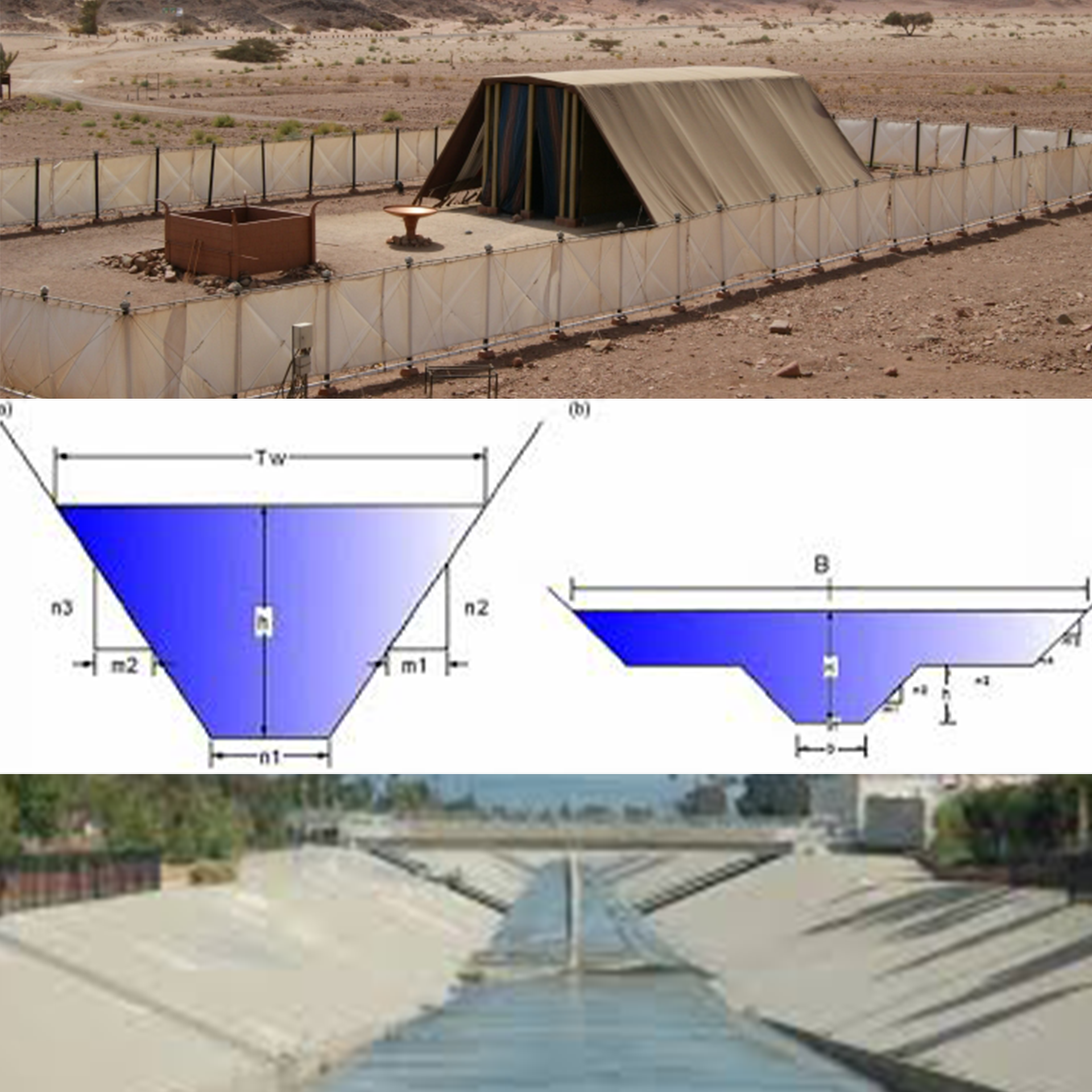
According to the Book of Exodus, the Tabernacle is a trapezoidal structure built as a physical dwelling for God on Earth.
God will typically inhabit this structure for approximately 400 years, for example, from the time of the Exodus to the time of King Solomon.
God will typically inhabit this structure for approximately 400 years, for example, from the time of the Exodus to the time of King Solomon.

The Shachihoko (or Makara) is a legendary river-dragon, originally known in Vedic mythology as "the water monster vehicle," or the vehicle of the river goddess, Ganga. This creature is known to guard the area where the river meets the ocean.
In 1935, The Toyota Motor Corporation (formerly known as Toyoda) adopted the Shachihoko as the mascot and logo of it's first vehicle, the G1.
In 1938, Toyota opened the Koromo plant (later renamed the Honsha Plant), on the Yahagi River.
The Koromo Plant was an integrated production plant that included all processes necessary for automobile production including casting and forging blank processes, machining, mechanical assembly, stamping, body assembly, painting, and overall assembly.
Its location on the river was important to allow necessary access to cooling water for casting foundries, as well as flow-through quenching channels, and hydro-electric connections from upstream dams.
Toyota engines were first cast, cooled, tempered, and machined in water diverted directly from the river.
These engines emerged from a tradition of river-metallurgy, using the same techniques that produced samurai swords. They carried the memory of water.
In 1957, as the first fleet of Toyota vehicles crossed the Pacific on the SS President Cleveland, a passenger liner, an unidentified creature was reported to have been seen on numerous occasions trailing the vessel, just outside the Port of Los Angeles by the US Coast Guard.
As the first Toyotas arrived at the port, the Shachihoko arrived with them at the mouth of its new home, the Los Angeles River.